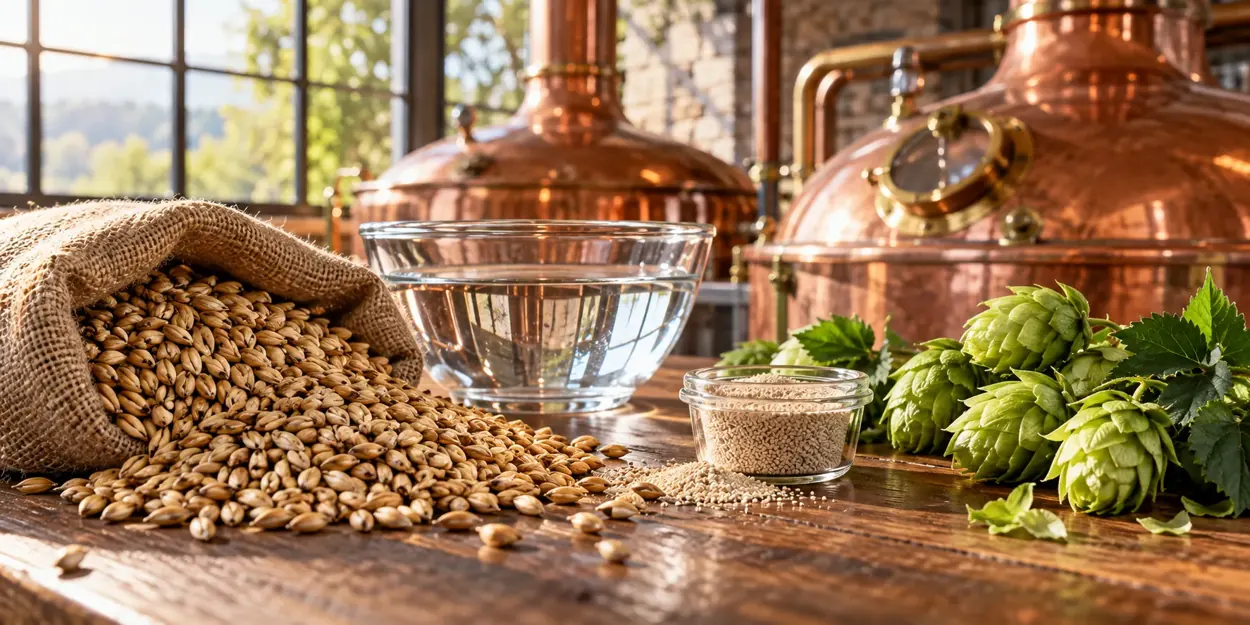
Malt and other grains
Malting lets grain develop enzymes that help turn starch into sugars during mashing. Yeast later uses much of that sugar. The base grain is often malted barley, and the type and roast level have a large effect on colour, body and taste.
A common base malt that gives fermentable sugars and a fairly gentle grain taste.
A light base malt often used when a clean, delicate grain note is wanted.
More malt depth, often with bread or toast-like notes.
Can add caramel-like sweetness, colour and body, depending on the amount used.
Dark colour and roast notes that can recall coffee or cocoa in a stout or porter.
Wheat can give a soft grain character, oats can add body, and rye can add a spicy grain note. Each can be malted or used in another brewing-ready state, depending on the recipe.
Why hops taste different
Hops can add bitterness, flavour and aroma. A brewer choosing hops early in a boil may seek bitterness; later or dry-hop additions are often used for aroma. The same variety can smell different across harvests and recipes, so these notes are starting points.
Often brings grapefruit, citrus and floral notes.
Commonly linked with citrus and tropical fruit aromas.
Can bring a mix of fruit, berry and citrus impressions.
Can lean piney, resinous or grapefruit-like.
A traditional hop often linked with a gentle herbal or spicy note.
Often used for restrained floral or herbal character.
No single hop belongs to only one beer style. Blends and brewing choices matter.
Yeast strains and souring microbes
Yeast turns much of the available sugar into alcohol and carbon dioxide. Different strains also bring different aromas. The brewer chooses a strain and fermentation approach for the beer they want to make.
Can keep yeast flavours quiet so malt and hops lead, as in many pale ales and IPAs.
Commonly ferments at cooler temperatures and is followed by cold conditioning.
In some German wheat beers, can bring banana and clove-like notes.
May add fruity or peppery notes, depending on the strain and process.
A yeast used in some mixed-fermentation beers for a different, sometimes earthy or funky character.
Bacteria, not yeast. They help create acidity in some sour beers; Lactobacillus is one example.
Water is part of the recipe
Water makes up most of the beer. Its minerals can change how a beer’s bitterness, malt and mouthfeel come across. Brewers may adjust minerals or acidity to suit a recipe. The exact water choice matters more than a simple rule about which city makes which style.
Adjuncts and other additions
“Adjunct” can mean an added grain or sugar outside a recipe’s main malt base. It does not automatically mean poor quality. Brewers also use additions for flavour or to help with a brewing step.
Can lighten body or grain flavour when used with malted barley.
Can bring fruit taste, colour and extra sugars; common in some sour and specialty beers.
Used in some wheat, seasonal and specialty beers. The effect depends on timing and dose.
Optional flavours in some stouts or specialty beers. Roasted malt alone can taste coffee-like without any coffee added.
A milk-derived sugar used in some sweet stouts and specialty beers. It is an allergen concern for some visitors; ask the brewery if needed.
Some brewers use process aids to help with starch conversion, clarity or other production goals. They are not needed in every beer.
Put it together
Compare a lager and a stout: the base grain, roasted grains, yeast and fermentation choices change what you see and taste. Compare a pale ale and an IPA: the malt may look similar, while hop choices and timing can make the aromas very different. The style pages show these choices in context.
Further reading: Brewers Association ingredients, BJCP beer styles, and Brewers Association process aids.